Overhead conveyor manufacturer · EMS · Power & Free · Custom lines

WANSUN Conveyor Systems Get a Quote

Engineering blog · 4 min read

Overhead Trolley Conveyor: How It Works, Components and Uses

Track, chain, trolleys, drive and take-up: the parts of an overhead trolley conveyor and what each does.

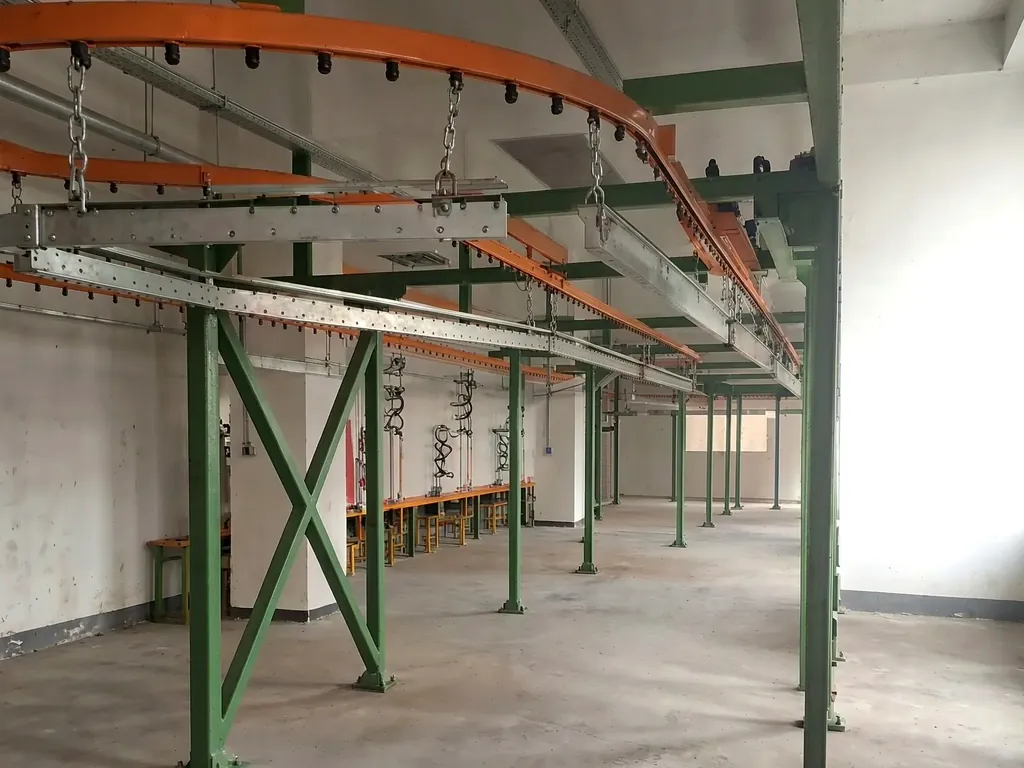
Overhead trolley conveyor with hooks in a large plant

The overhead trolley conveyor is the workhorse of coating lines and foundries. Knowing its parts helps you specify, compare and maintain one.

In this guide
  1. How an Overhead Trolley Conveyor Works
  2. Main Components
    1. Track
    2. Chain
    3. Trolleys and Attachments
    4. Drive and Take-Up
    5. Curves and Inclines
  3. Where Trolley Conveyors Are Used
  4. Limits and How to Overcome Them
  5. FAQ

How an Overhead Trolley Conveyor Works

An overhead trolley conveyor is a chain conveyor whose chain is carried by trolleys running on a track. Attachments below the trolleys hold hooks, load bars or carriers. A drive unit pulls the chain round a closed loop, and a take-up keeps it tensioned as it wears or expands with heat.
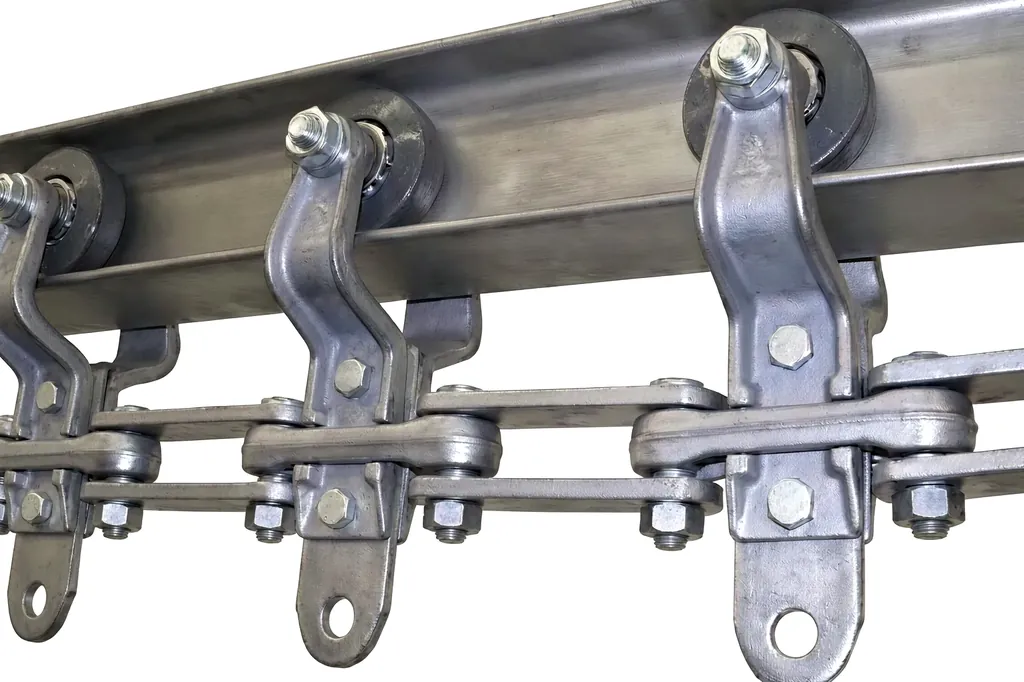
Rivetless chain with trolleys and pendants on a steel track
Trolleys carry the chain; pendants below hold the hooks.

Main Components

01Track

Either an I-beam, whose lower flanges carry the trolley wheels, or an enclosed box track with the chain inside. I-beam suits heavy and hot duty; enclosed track suits dusty areas and lighter loads.

Options
I-beam, enclosed track
Choose by
Load, heat, dust

02Chain

Drop-forged rivetless chain such as X-348, X-458 or X-678 is standard on I-beam conveyors. It flexes horizontally and vertically and can be taken apart without tools.

Common sizes
X-348, X-458, X-678
Pitch
3, 4 or 6 in

How to calculate chain pull →

03Trolleys and Attachments

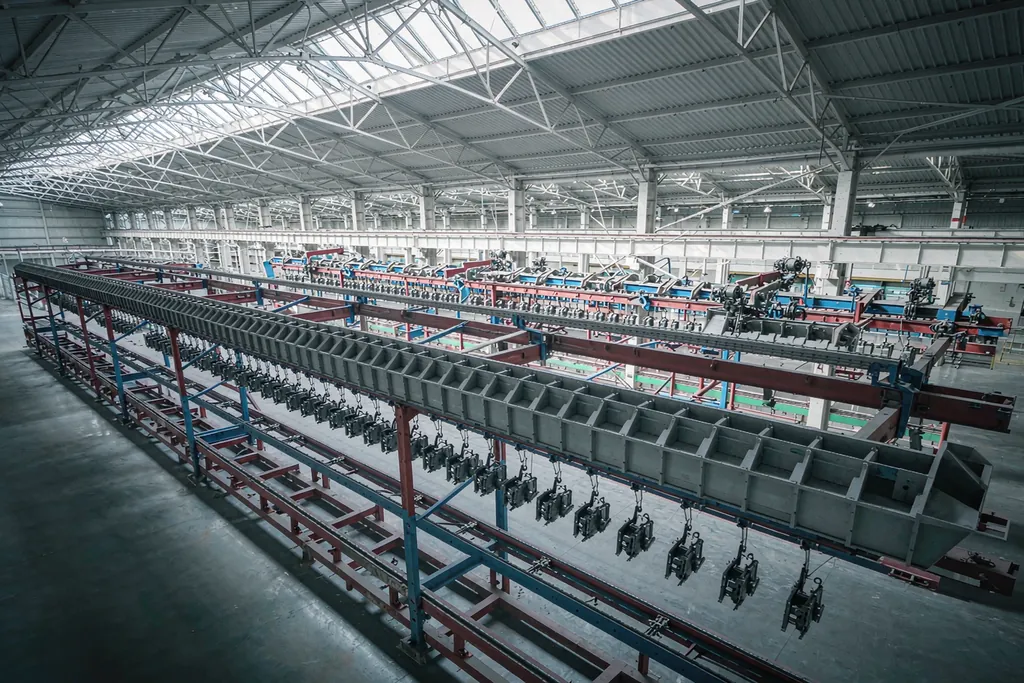
Load bars hanging from an overhead trolley conveyor
Load bars share heavy parts between trolleys.

Trolleys carry the load on two wheels with sealed or high-temperature bearings. Pendants, hooks and load bars hang below; load bars spread heavy parts over two or more trolleys.

Wear parts
Wheels and bearings
Tip
Match bearings to oven temperature

04Drive and Take-Up

A caterpillar or sprocket drive moves the chain, with overload protection. The take-up keeps tension constant; in ovens it must absorb thermal growth.

Drive types
Caterpillar, sprocket
Take-up
Screw, spring or pneumatic

05Curves and Inclines

Roller turns guide the chain round horizontal bends; vertical curves change elevation. Each curve adds chain pull, so routes with fewer bends need smaller drives.

Watch
Curve radius vs carrier length
Effect
Each bend adds chain pull

Where Trolley Conveyors Are Used

  • Powder coating and paint lines through pretreatment, booth and oven
  • Foundries and forging shops moving hot castings
  • Assembly loops with steady flow
  • Storage and cooling loops
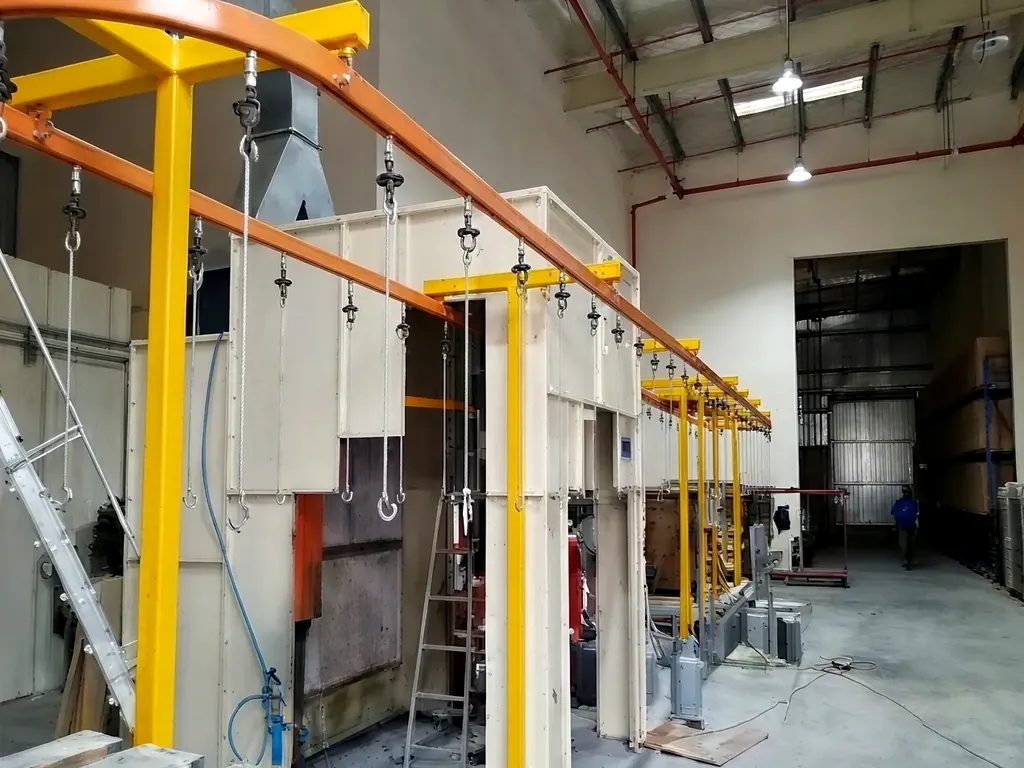
Powder coating line with overhead chain conveyor and yellow supports
A trolley conveyor running beside a powder booth.

Limits and How to Overcome Them

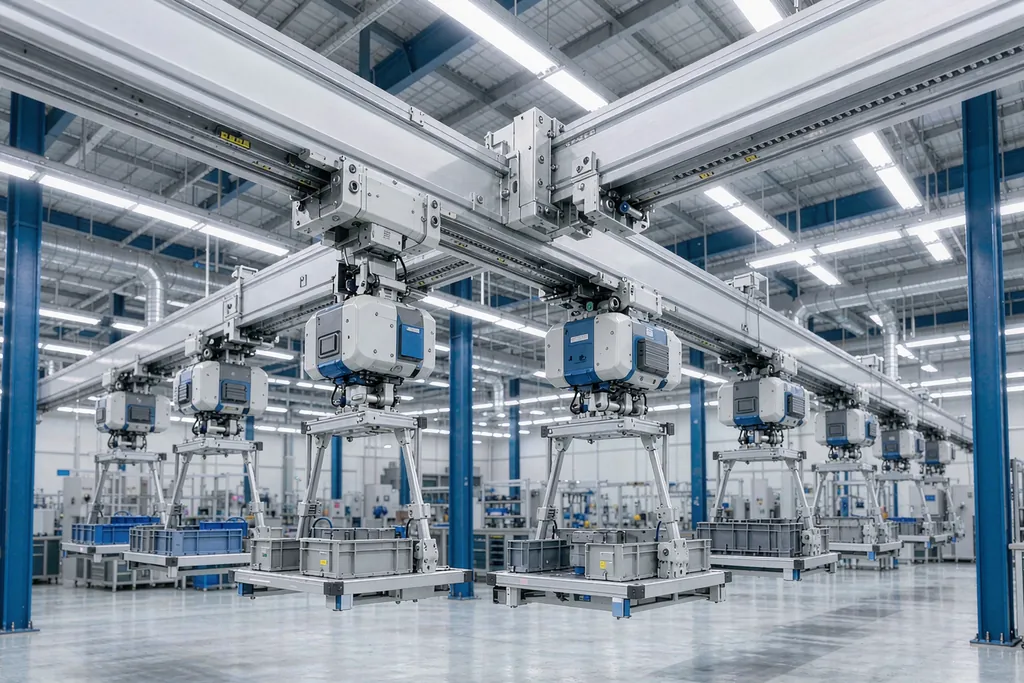
All carriers on a trolley conveyor move together. If one station needs more time, the line must slow down for everyone. Where that matters, a power and free conveyor adds a free track so carriers can stop and wait, or an electric monorail gives every carrier its own drive.
FAQ

Questions About This Topic

Still have a question? Ask our engineers.

What is an overhead trolley conveyor?

A chain conveyor whose chain is carried by trolleys on an overhead track, with hooks or carriers hanging below.

What chain is used on trolley conveyors?

Usually drop-forged rivetless chain such as X-348, X-458 or X-678.

Can a trolley conveyor stop one carrier?

No; all carriers move together. Power and free or electric monorail systems allow individual stops.

Keep Reading

Related Articles

Send us your layout. Get an engineer's answer.

Share a drawing, your products and the output you need. We reply within 24 hours with questions or a first concept.