
Electric monorail system
Electric Monorail Conveyor Systems
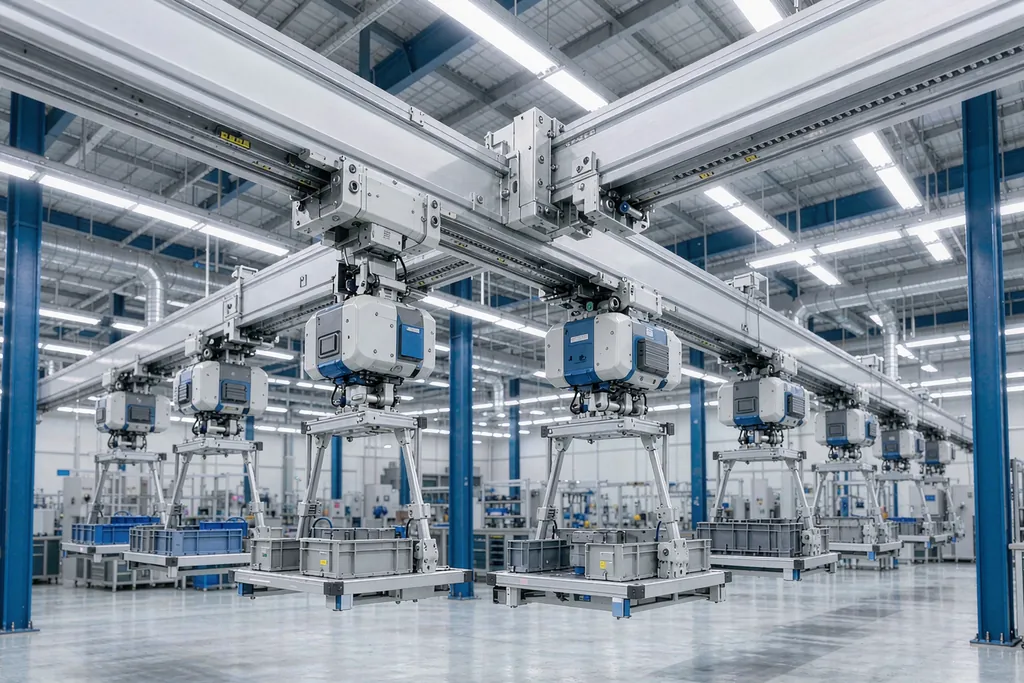
Individually driven carriers on an overhead rail. Each one stops exactly where the operator or robot needs it.
What an Electric Monorail Conveyor Does
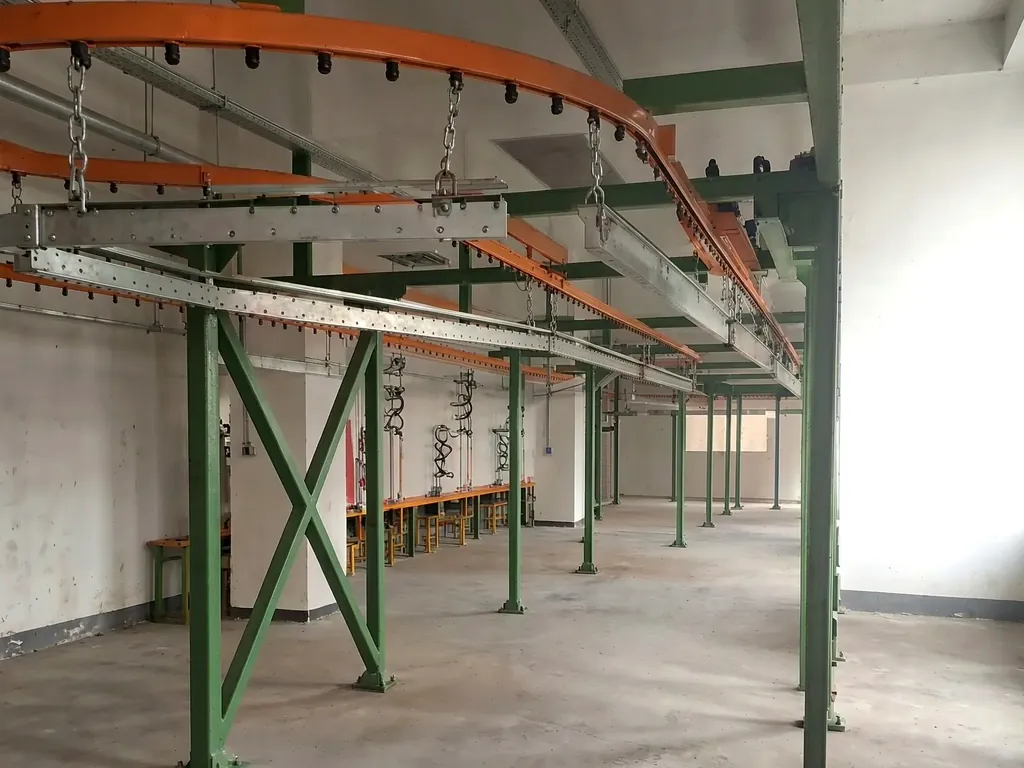
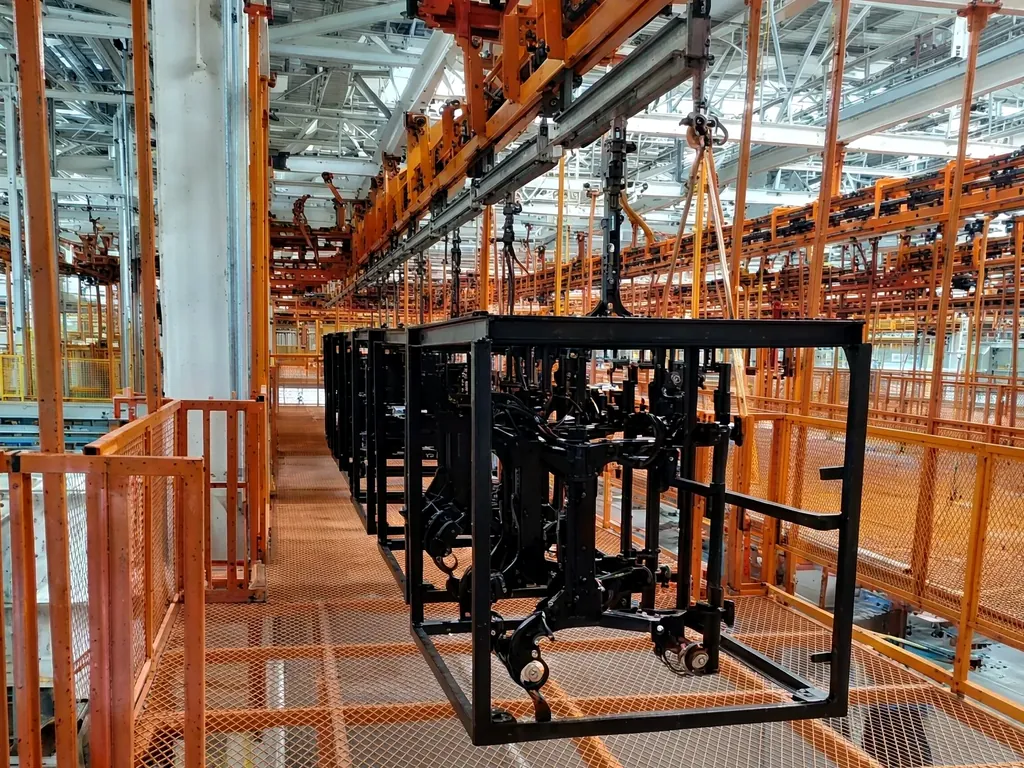
An electric monorail conveyor, often called EMS, moves products on carriers that each have their own motor, wheels and controller.
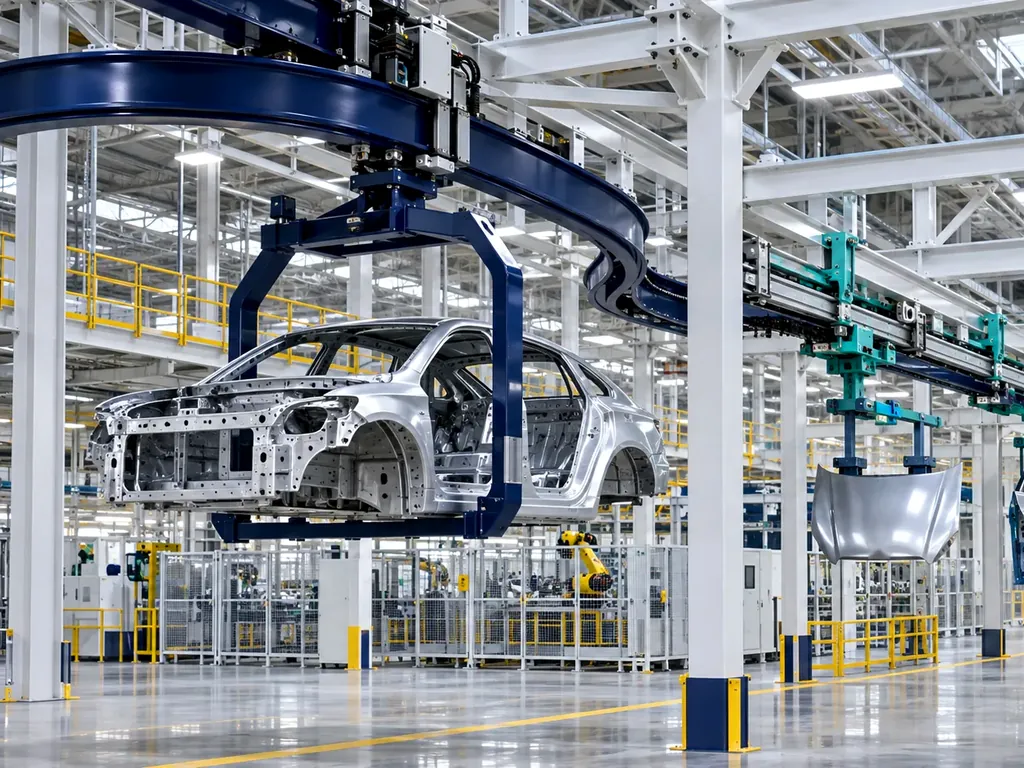
The carriers run on an aluminium or steel rail and take power from conductor rails along the track. Because each carrier is driven on its own, the line can run fast between stations, slow down in work zones and stop to the millimetre at robots or assembly points.
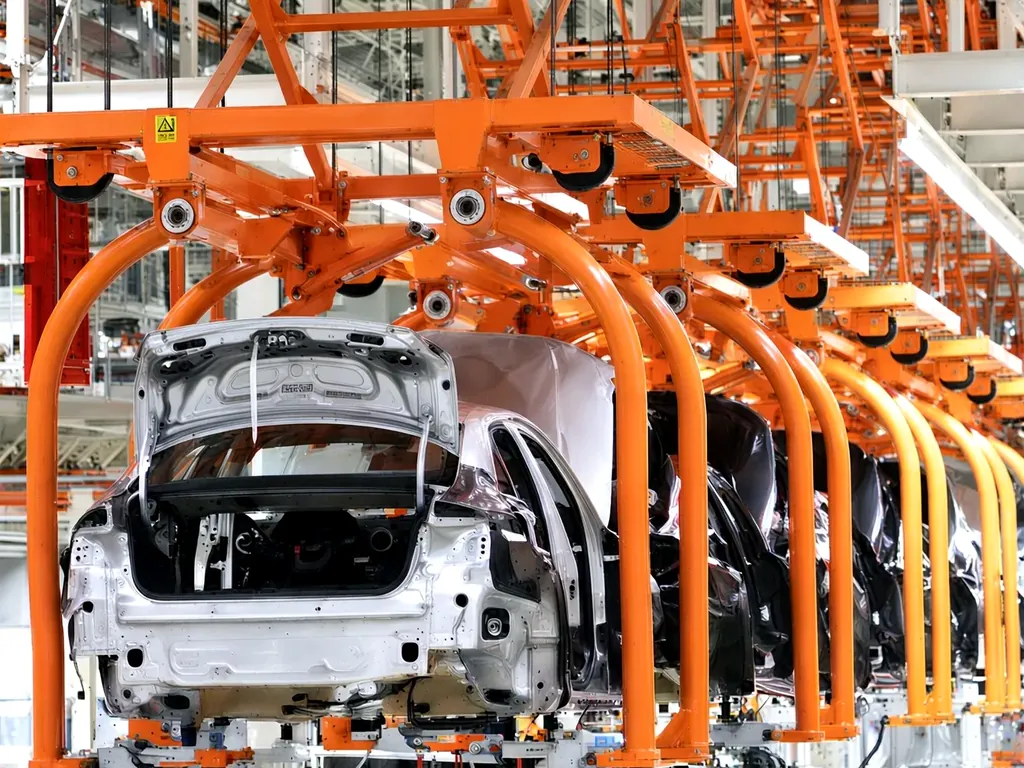
That freedom is why electric monorails dominate automotive trim and final assembly, and why more battery, appliance and machinery plants choose them for flexible lines.
Inside an EMS
How the System Works
Four building blocks, engineered together.
Rail and switches
Rail profile, curves, switches and turntables define the route. Switches send carriers to parallel stations, stores or repair loops.
Carriers
A drive unit, idle trolleys and a load bar or hanger designed around your product, with optional hoist or rotation.
Power and data
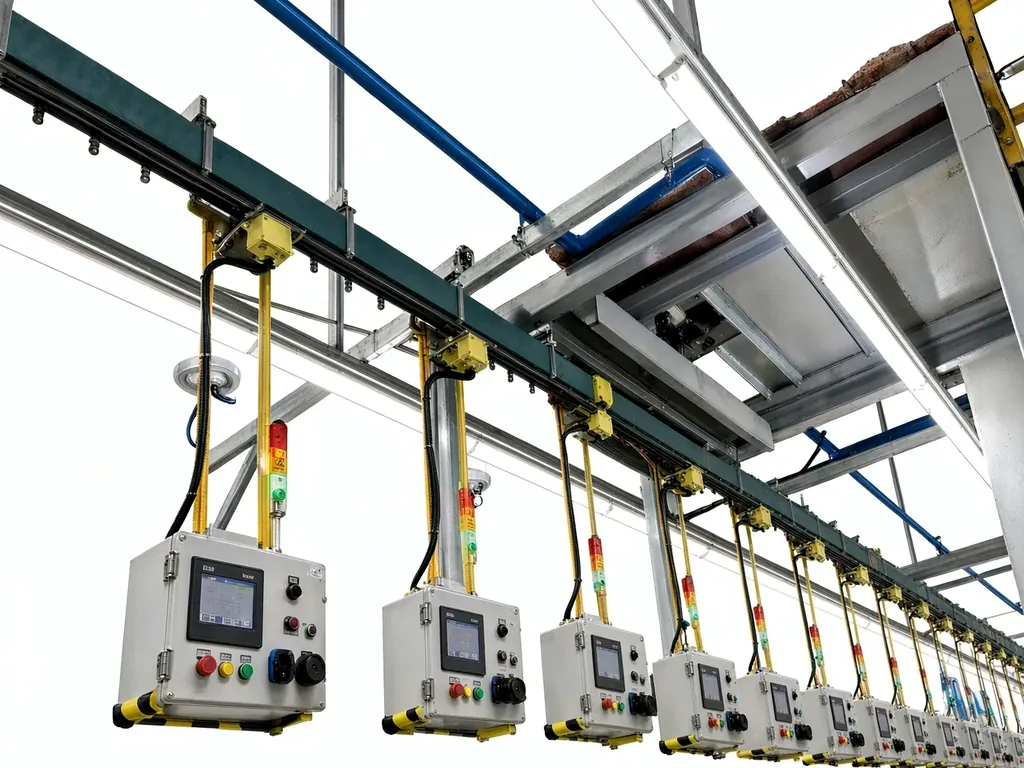
Conductor rails feed the carriers. Position sensors and carrier IDs tell the PLC where every product is.
Controls
Zone control, station panels, safety functions and a link to your MES for sequencing and traceability.
Configuration
Options That Change the Line
Lifting carriers
Hoists or scissor units raise and lower the product, so each station works at the right height.
Rotating units
The product turns to the operator for work on every side.
Tandem carriers
Two synchronised drives carry long or heavy products such as frames and battery packs.
Stores and buffers
Parallel lanes hold carriers between departments and release them in sequence.
Vertical lifts
Carriers move between floors, mezzanines and conveyor levels.
Safety functions
Collision avoidance, emergency stops and guarded transfer zones.
Technical Overview
Every EMS is configured for its products and stations. These are the parameters we size with you:
- Carrier load
- From small modules to complete car bodies
- Speed
- Variable per section
- Positioning
- Stops at defined station points
- Lifting
- Hoist or scissor units
- Identification
- Carrier ID per carrier
- Interfaces
- PLC, HMI, MES
Applications
Where Electric Monorails Work Best
How is an electric monorail conveyor powered?
Each carrier takes power from conductor rails mounted along the track. Its on-board drive and controller move it independently of the other carriers.
Can EMS carriers lift the product?
Yes. Carriers can include hoists or scissor units, so the product is raised or lowered to the best height at each station.
How does an EMS compare with a power and free conveyor?
EMS gives every carrier its own speed and stop position, which suits assembly. Power and free uses one chain for many carriers, costs less per carrier and handles hot zones better.
Can an EMS be extended later?
Yes. Rail, switches and carriers are modular. Extensions are planned so most of the work happens before a short shutdown.
Which PLC brands do you use?
We work with the major PLC and drive brands and follow your plant standard where one exists.
Send us your layout. Get an engineer's answer.
Share a drawing, your products and the output you need. We reply within 24 hours with questions or a first concept.