
Industry
Overhead Conveyors for Automotive Plants
From body in white to final assembly, conveyors set the rhythm of a car plant.
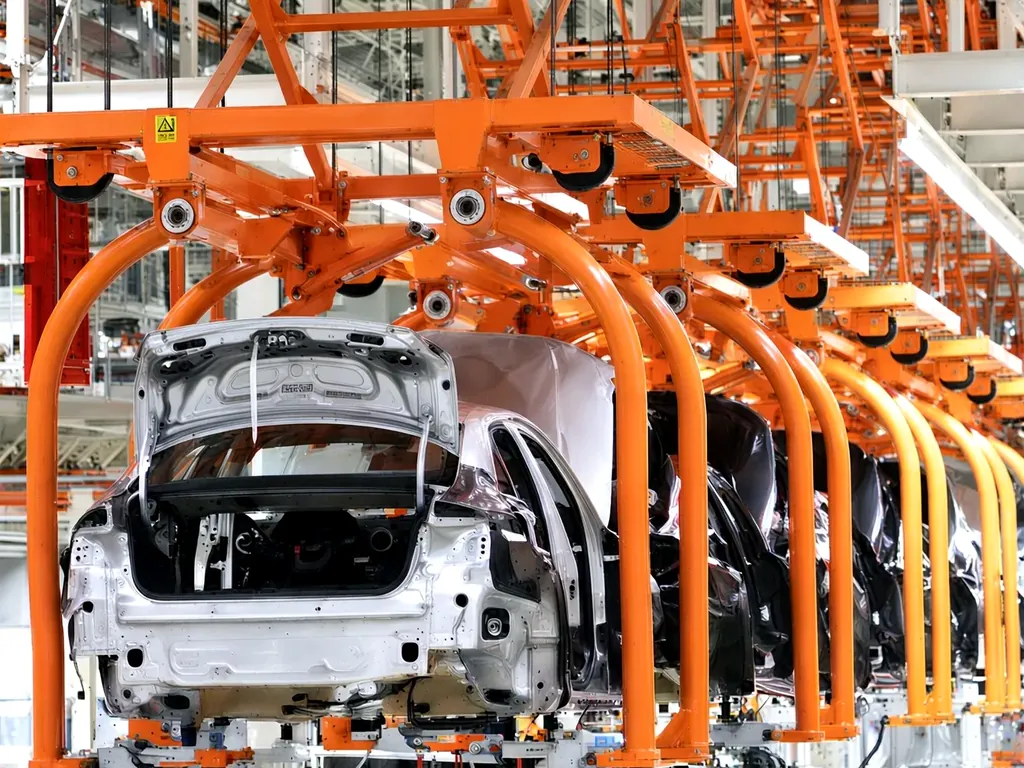
Every Shop Has Different Needs
A car plant uses several conveyor technologies, each where it fits best.
Body shops need precise transfers between welding cells. Paint shops need clean conveying through booths and ovens. Final assembly needs ergonomic heights and stops at hundreds of stations. Between them, storage systems decouple the shops and sequence bodies for assembly.
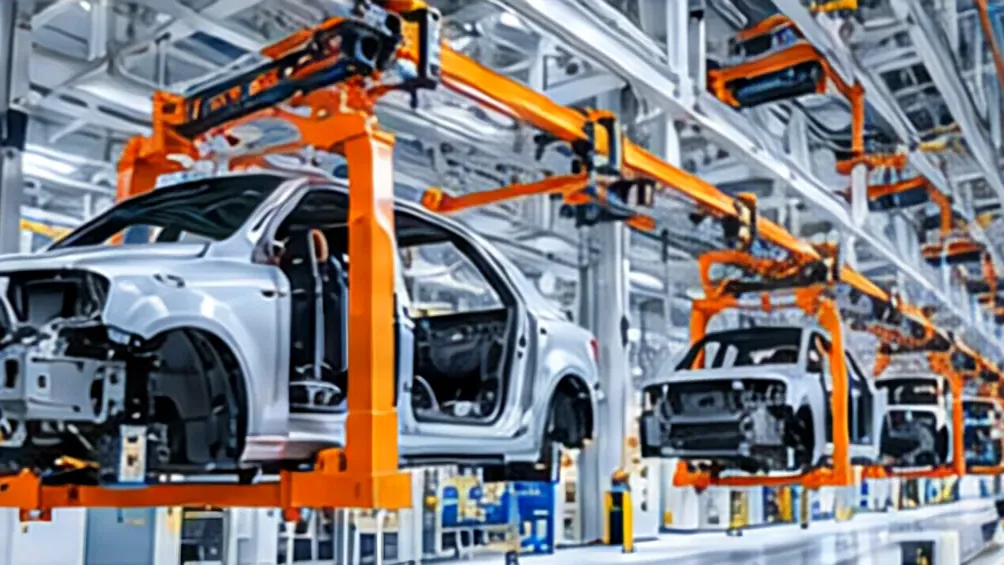
Where we help
Typical Applications
Body shop
Overhead transfers between welding cells and body stores.
Paint shop
Power and free and inverted systems through booths and ovens.
Painted body storage
Lanes that store and sequence bodies by model and colour.
Final assembly
EMS with lifting carriers for trim and chassis lines.
Doors and modules
Separate lines for doors, cockpits and drivetrains.
EV components
Battery pack and e-drive lines with tracking.
Our advice
Recommended Systems
| Area | Recommended system | Why |
|---|---|---|
| Body shop | Electric monorail, custom transfers | Precise positioning between cells |
| Paint shop | Power and free, inverted power and free | Heat, clean conveying, buffers |
| Storage | Power and free lanes | Accumulation and sequencing |
| Final assembly | Electric monorail with lifts | Ergonomics and model mix |
Which conveyor is used in automotive final assembly?
Mostly electric monorail systems with lifting carriers, because they stop precisely and bring the body to the right height.
Why do paint shops use power and free?
It handles oven temperatures, accumulates carriers and routes them to repair loops and stores.
Do you supply EV battery lines?
Yes. We design conveyors for battery packs, drivetrains and their sub-assembly lines.
Send us your layout. Get an engineer's answer.
Share a drawing, your products and the output you need. We reply within 24 hours with questions or a first concept.