Overhead conveyor manufacturer · EMS · Power & Free · Custom lines

WANSUN Conveyor Systems Get a Quote

Engineering blog · 4 min read

Hanging Conveyor Systems: How to Hang Products and Choose the Drive

Hooks, racks, load bars or fixtures? How to hang your product and which conveyor to put behind it.

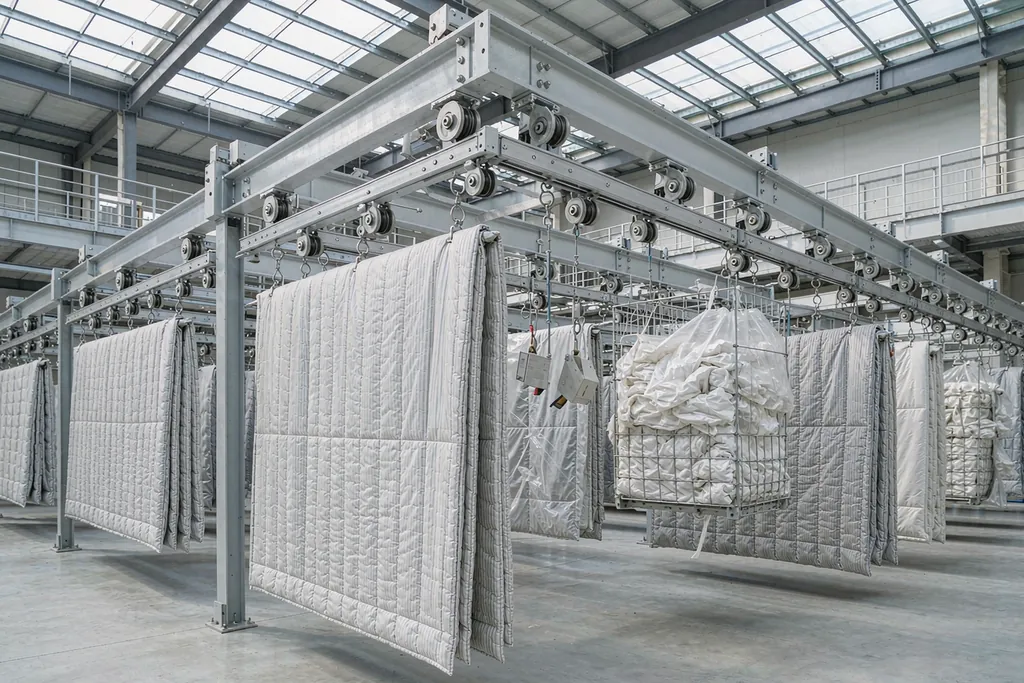
Duvets hanging from overhead trolleys in a distribution hall

A hanging conveyor is only as good as the way the product hangs. Start with the part, then choose the hanger and the drive.

In this guide
  1. What People Mean by a Hanging Conveyor
  2. Ways to Hang the Product
    1. Single Hooks
    2. Racks and Multi-Tier Hangers
    3. Load Bars
    4. Product Carriers and Fixtures
  3. Choosing the Conveyor Behind the Hangers
  4. Practical Tips
  5. FAQ

What People Mean by a Hanging Conveyor

A hanging conveyor is any overhead conveyor that carries products suspended below the track: on hooks, racks, load bars or product-specific carriers. Hanging parts are reachable from all sides, which is why hanging conveyors are standard for painting, coating, washing, garments and many assembly tasks.
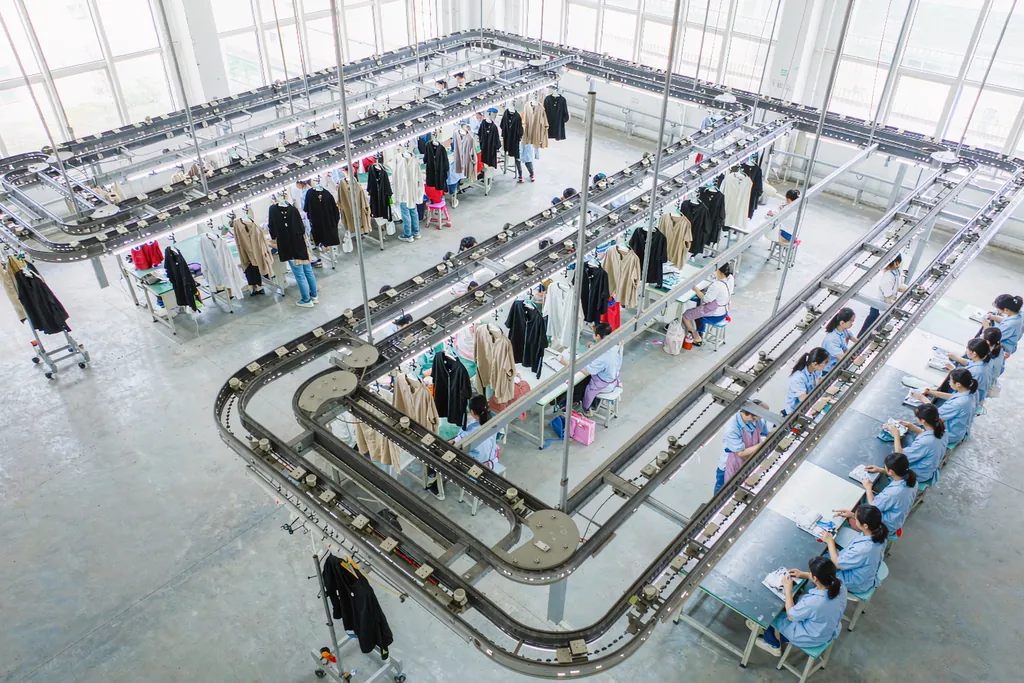
Garment hanging conveyor looping above a sewing line
In garment plants, hanging conveyors bring work to every operator.

Ways to Hang the Product

01Single Hooks
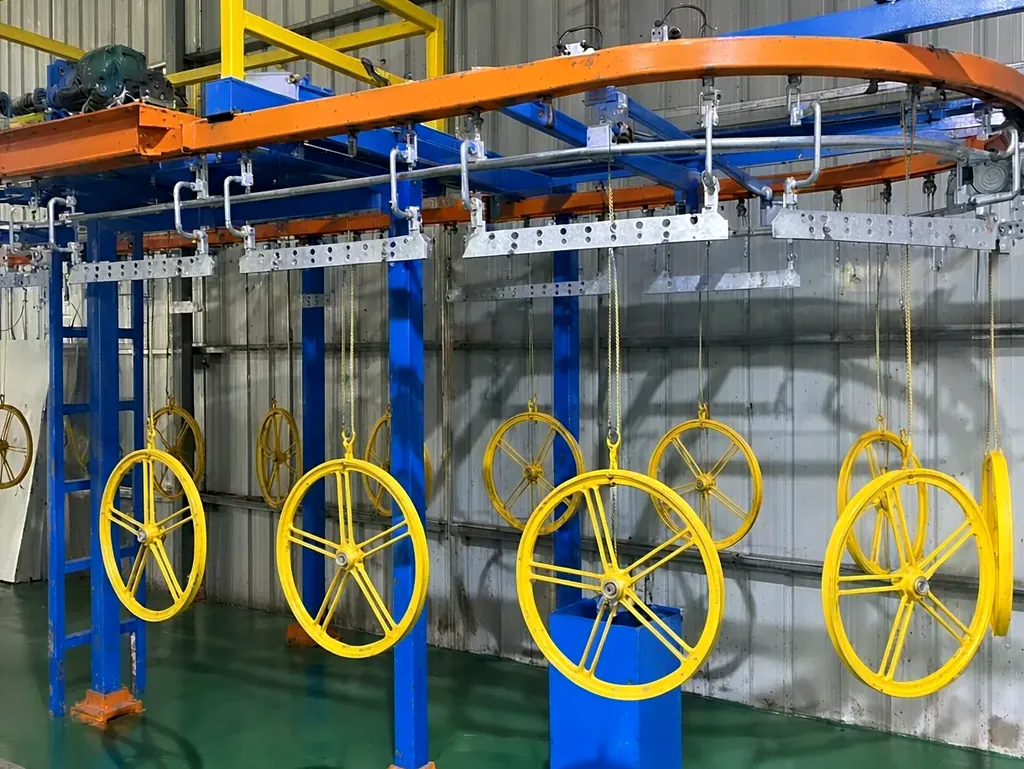
Wheels hanging on hooks on a coating line
Single hooks for wheels and medium parts.

One part per hook, often with a swivel. Simple and fast to load; best for medium parts and coating lines.

Best for
Medium parts, coating
Watch
Hook cleaning and grounding

02Racks and Multi-Tier Hangers

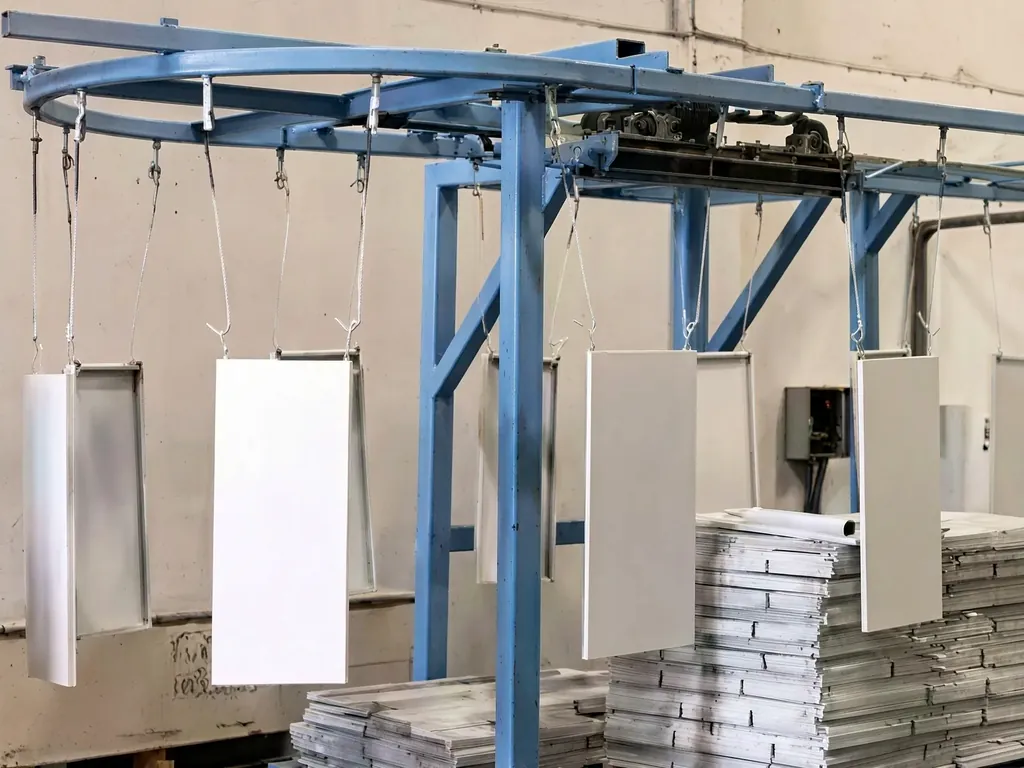
Panels hanging in rows on an overhead conveyor
Racks fill the booth window with small and flat parts.

Several small parts on one hanger raise hanging density and output.

Best for
Small parts, panels
Watch
Even spacing for coverage

03Load Bars

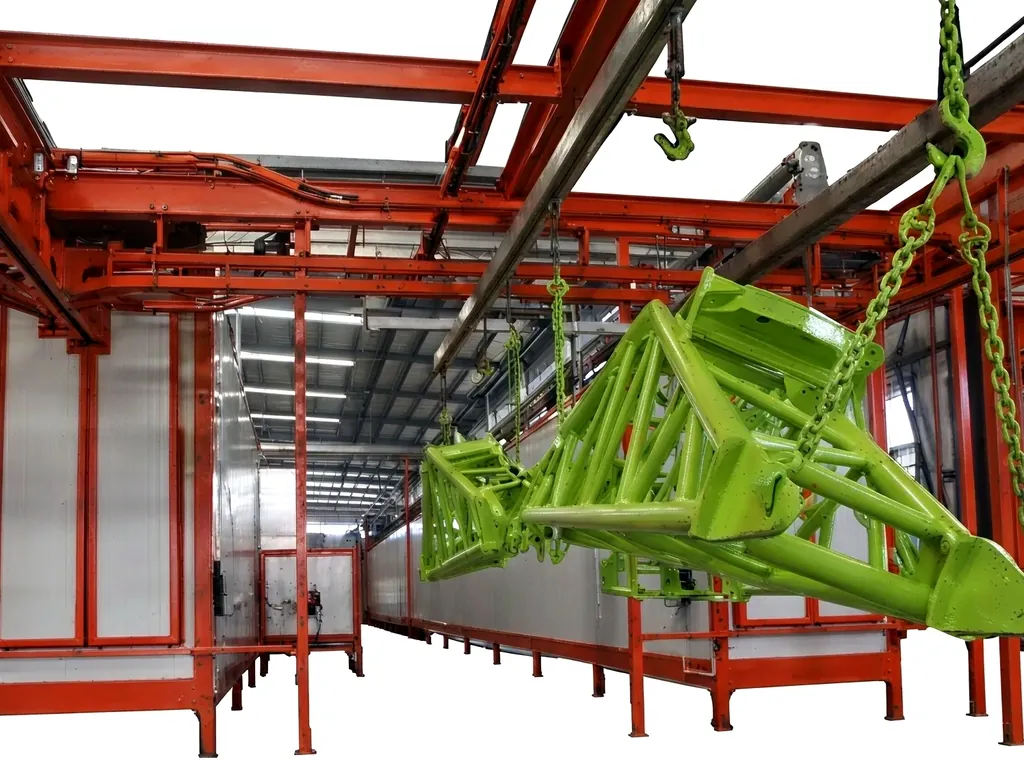
Heavy frame hanging from chains on load bars
Load bars spread heavy frames over several trolleys.

A bar spanning two or more trolleys carries heavy or long parts and shares the weight.

Best for
Frames, long parts
Watch
Curve clearance

04Product Carriers and Fixtures

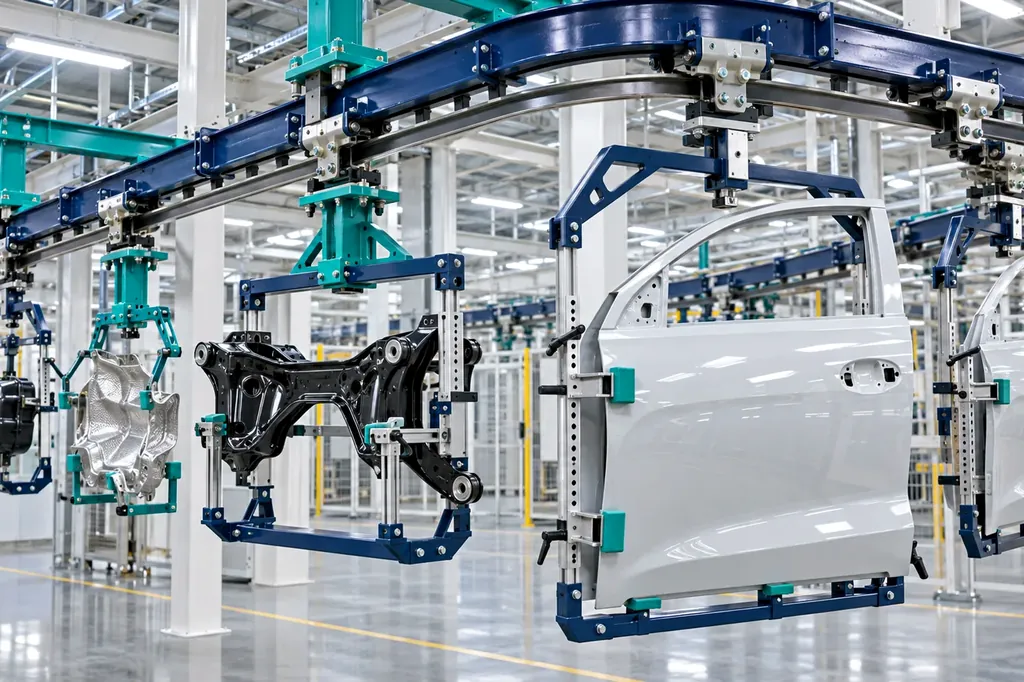
Product-specific carriers with fixtures for doors and subframes
Fixtures hold parts in a defined position.

Carriers with locators and clamps hold parts in a defined position for robots or precise assembly.

Best for
Assembly, robot handling
Watch
Cost per carrier

See custom carriers →

Choosing the Conveyor Behind the Hangers

Hanging conveyor drive options
NeedRecommendedWhy
Steady flow, one speedChain-driven trolley conveyorSimple, economical
Stops, buffers, routingPower and freeCarriers wait independently
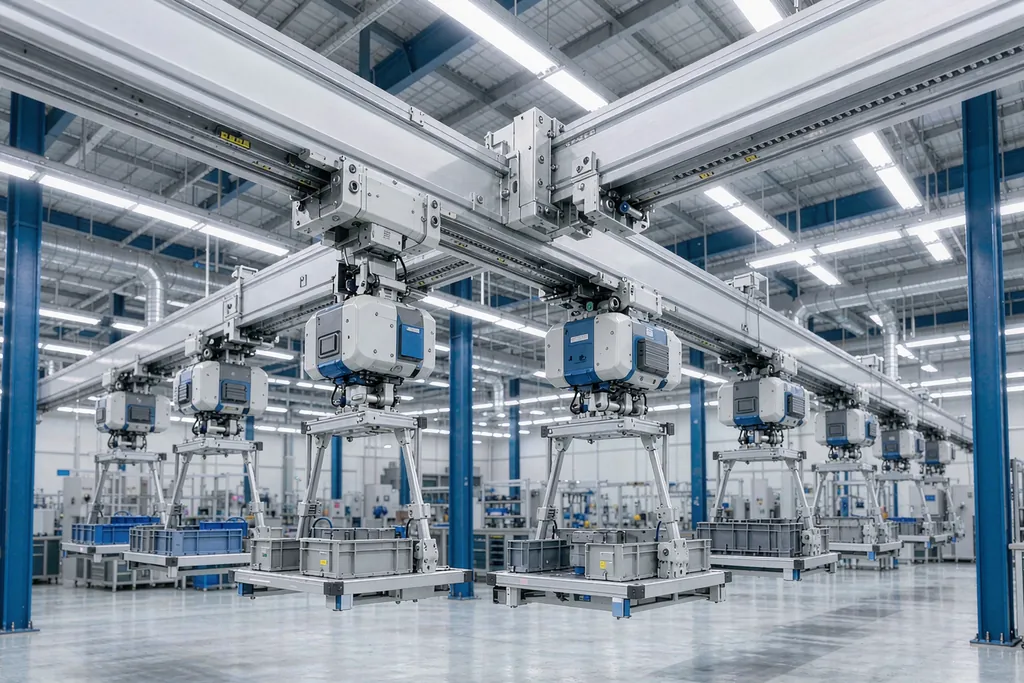
Precise stops, liftingElectric monorailIndividual control

Practical Tips

  • Design hangers from real parts and test samples
  • Keep the centre of gravity under the hook to limit swinging
  • Check clearance in curves, booths and oven openings
  • Plan ergonomic loading height
  • Plan hook cleaning if parts are coated
FAQ

Questions About This Topic

Still have a question? Ask our engineers.

What is a hanging conveyor?

An overhead conveyor that carries products suspended below the track on hooks, racks, load bars or carriers.

How do I stop parts swinging?

Keep the centre of gravity below the hanging point, use guides at critical points and keep the chain moving smoothly.

Which drive suits a hanging conveyor?

Chain-driven for steady flow, power and free for stops and buffers, electric monorail for precise stops and lifting.

Keep Reading

Related Articles

Send us your layout. Get an engineer's answer.

Share a drawing, your products and the output you need. We reply within 24 hours with questions or a first concept.