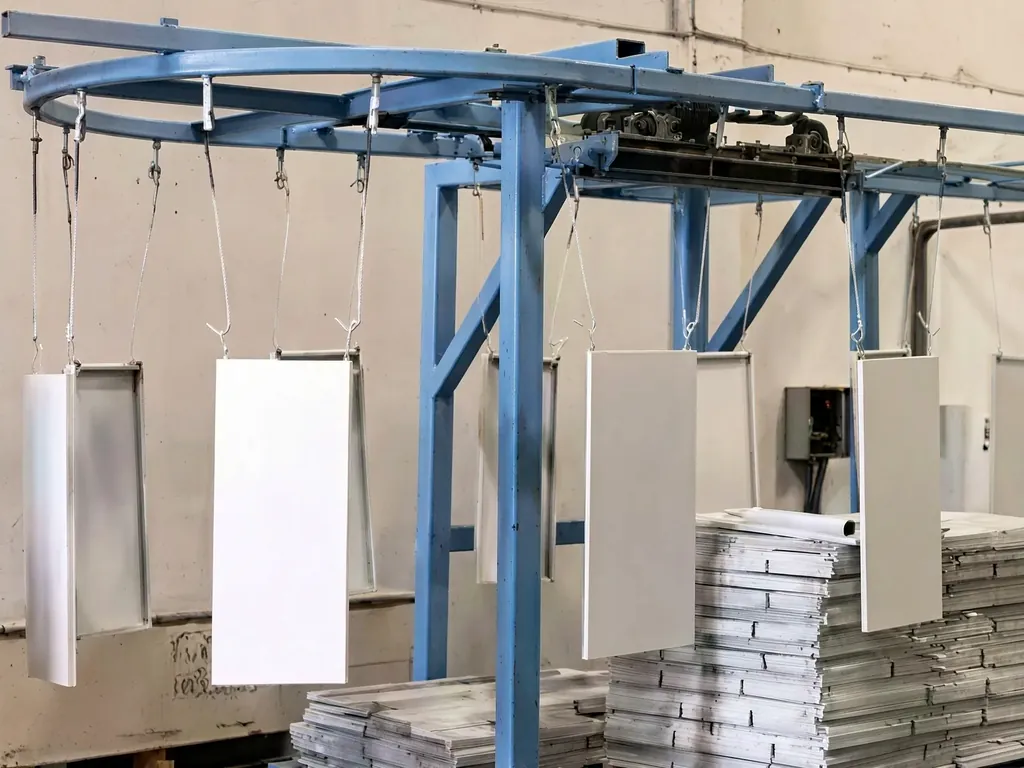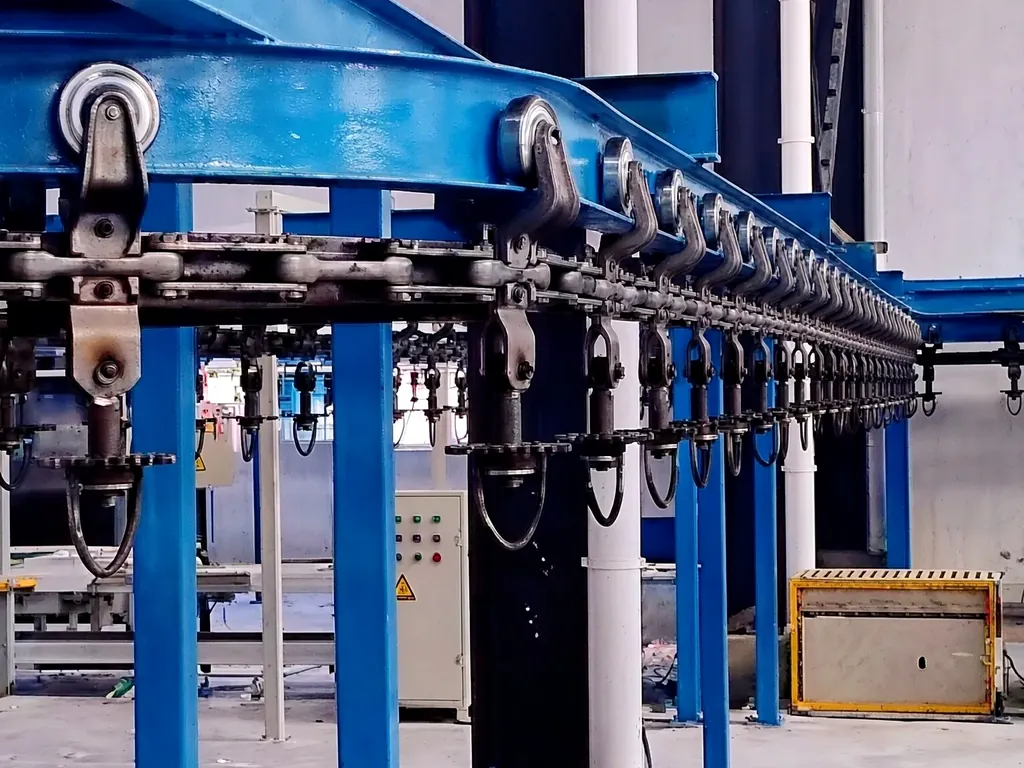
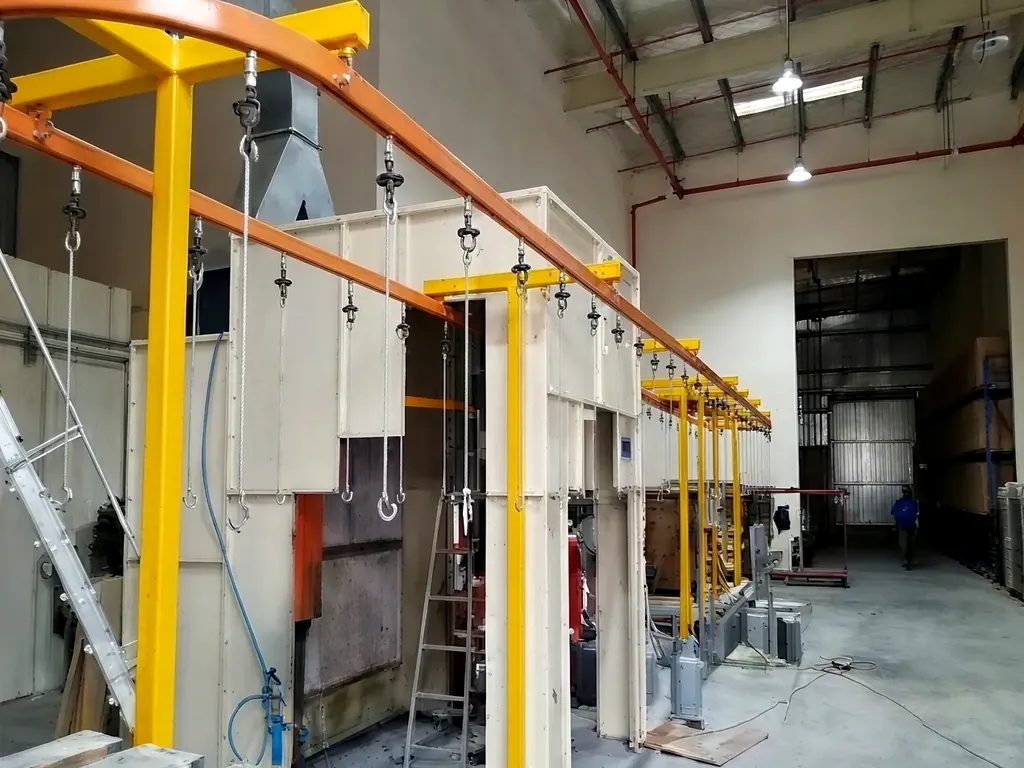
Two-wheeler plants paint frames, swing arms, tanks and many small parts, often in several colours. The conveyor must hang awkward shapes, pass them through every process and keep colours organised.
Typical Process
- Loading and masking
- Pretreatment: degreasing and conversion coating
- Drying
- E-coat or primer, where used
- Powder or liquid topcoat
- Curing
- Cooling, inspection and unloading
Hanging the Frames
Frames hang from the head tube or a fixture point on a hook or small carrier. Rotating hooks help guns and operators reach every side, and hangers must not mask visible areas. Small parts go on racks to raise hanging density.
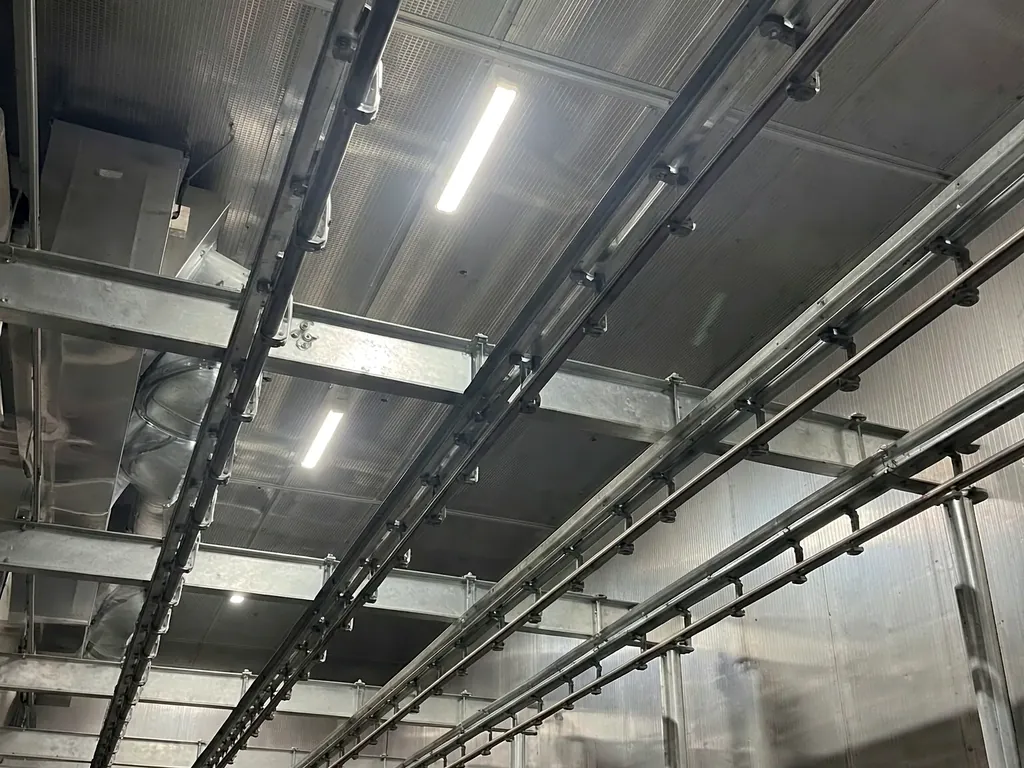
Choosing the Conveyor
| Situation | Recommended | Why |
|---|---|---|
| One colour, steady output | Chain conveyor | Simple and economical |
| Several colours, batches | Power and free | Group carriers by colour, buffer at booths |
| E-coat dip | Conveyor with drop sections | Dip angle and dwell controlled |
| Mixed frames and small parts | Power and free with racks | Different loading times |
Design Tips
- Check booth and oven openings for the largest frame and its swing
- Use curve radii that suit long frames
- Plan hook stripping to keep grounding reliable
- Design masking and loading stations at ergonomic height
- Reserve space for a second colour booth
See coating and finishing lines and our guide to hanging conveyors.