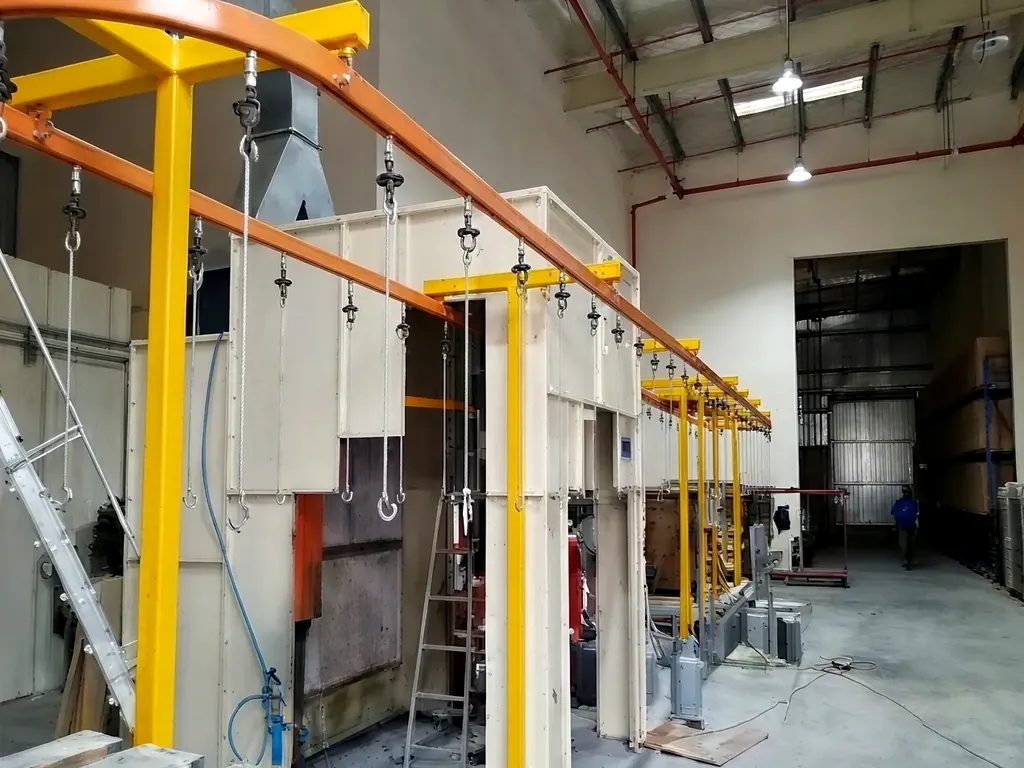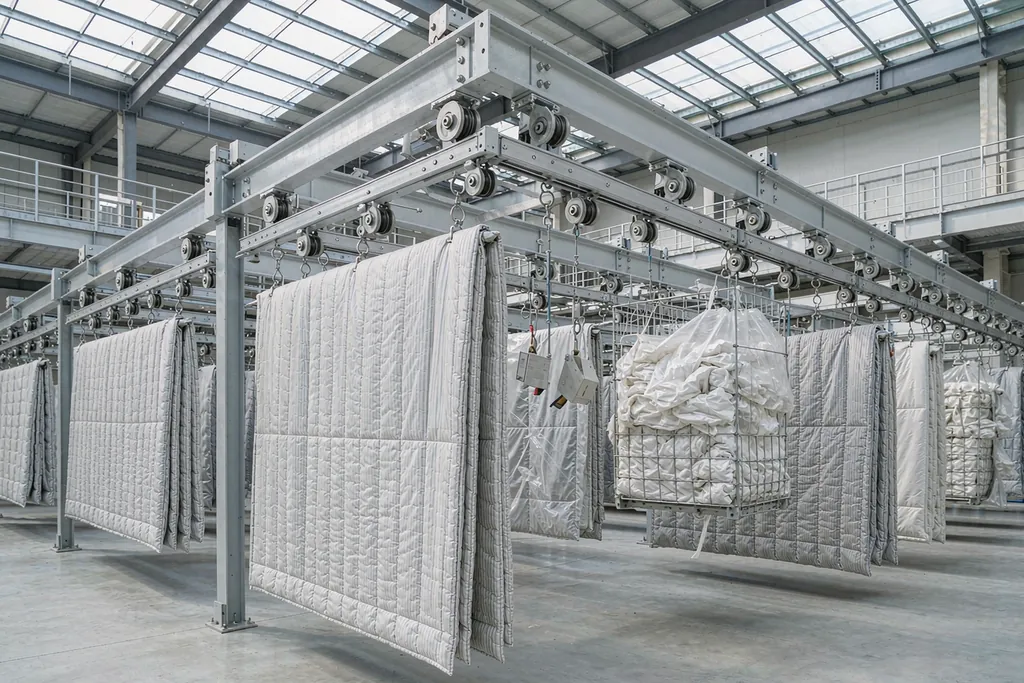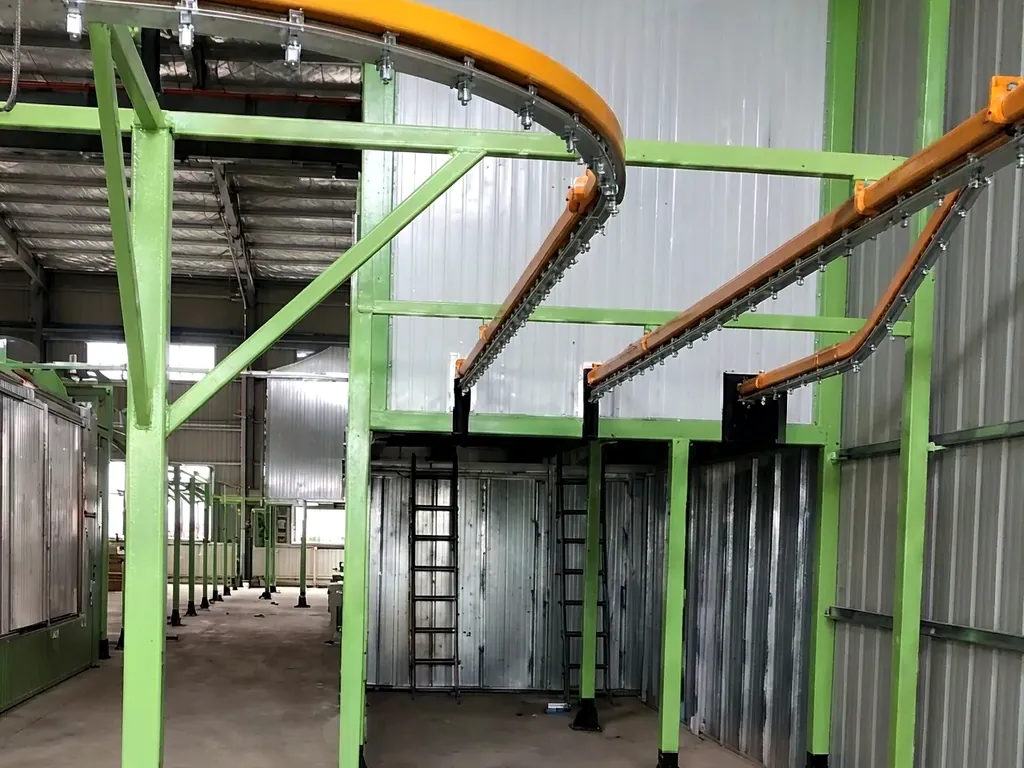
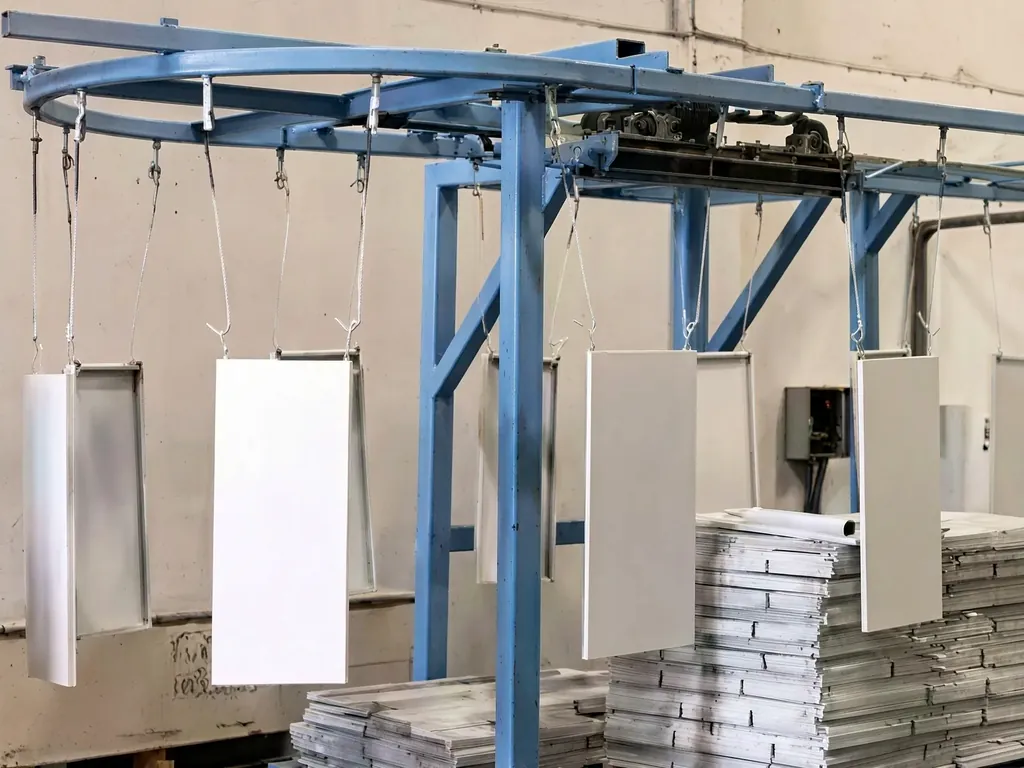
Metal furniture combines tubes, sheet panels and wire parts in many colours. The conveyor decides hanging density, colour flexibility and how much floor space the line needs.
Typical Parts and Hanging
| Part | How it hangs | Watch |
|---|---|---|
| Chair and desk frames | Hooks at hidden points | Contact marks |
| Shelving uprights | Several per rack | Swing of long parts |
| Panels and doors | Single row, both sides sprayed | Booth opening height |
| Wire and small parts | Racks or baskets | Even coverage |
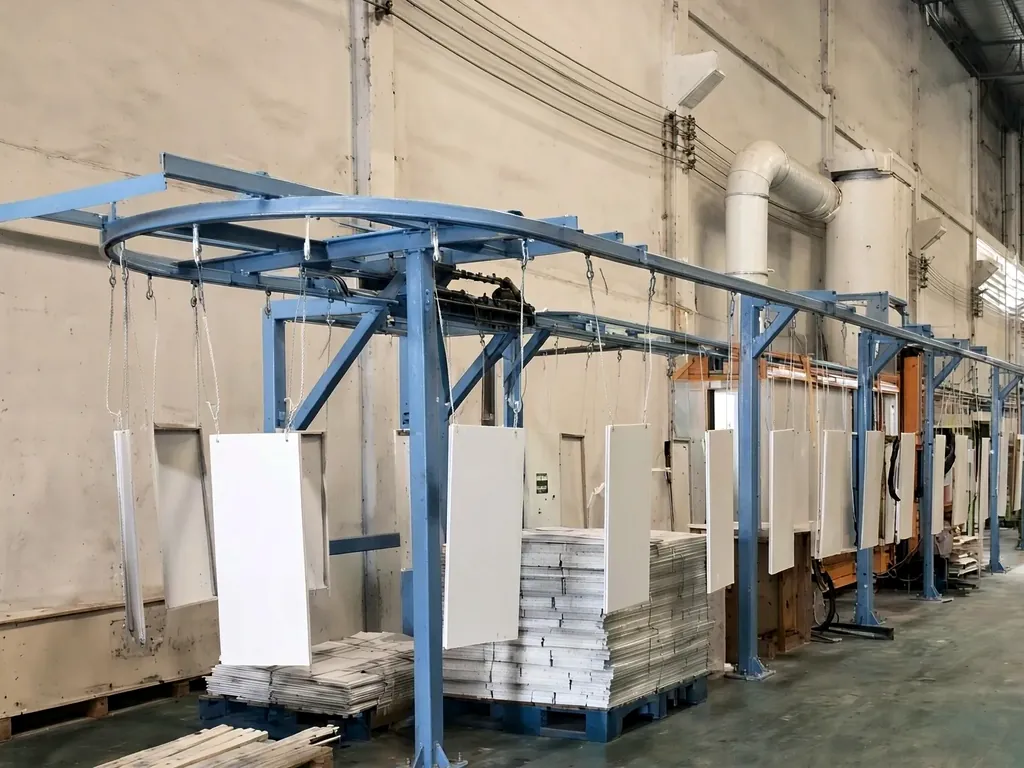
Line Layout
- Loading area with buffer
- Pretreatment and dry-off oven
- One or two powder booths
- Curing oven folded into several passes
- Cooling, unloading and packing
Worked Example: Oven Length
Illustrative figures: the line runs at 2 m/min and the powder needs 15 minutes at cure temperature. The oven must hold 2 × 15 = 30 m of conveyor, usually folded into several passes. If racks double the parts per metre, the same output runs at 1 m/min and needs only 15 m in the oven.
Colour Changes
Furniture makers often run many colours. A power and free conveyor groups carriers by colour and buffers them before the booth, so colour changes create fewer empty gaps. On a chain conveyor, schedule colours in blocks and leave planned gaps.
Design Tips
- Hide hook points on visible furniture surfaces
- Raise hanging density with racks for small parts
- Size the conveyor for the longest shelving part
- Plan powder recovery and colour change time