Both use the space under the roof, but a crane and an overhead conveyor answer different questions.
In this guide
Two Different Jobs
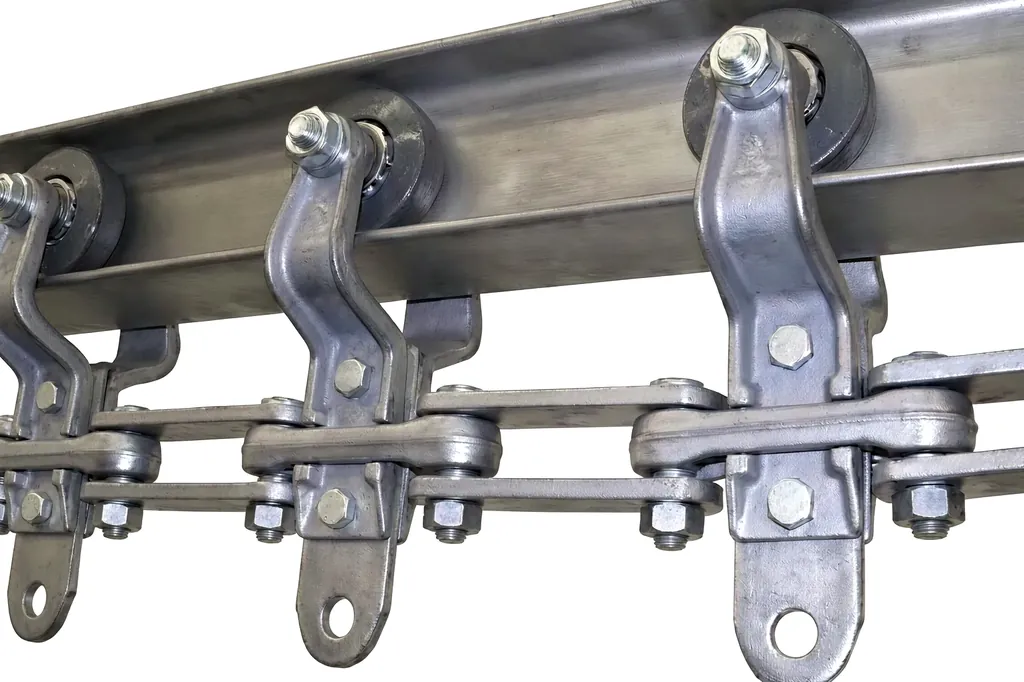
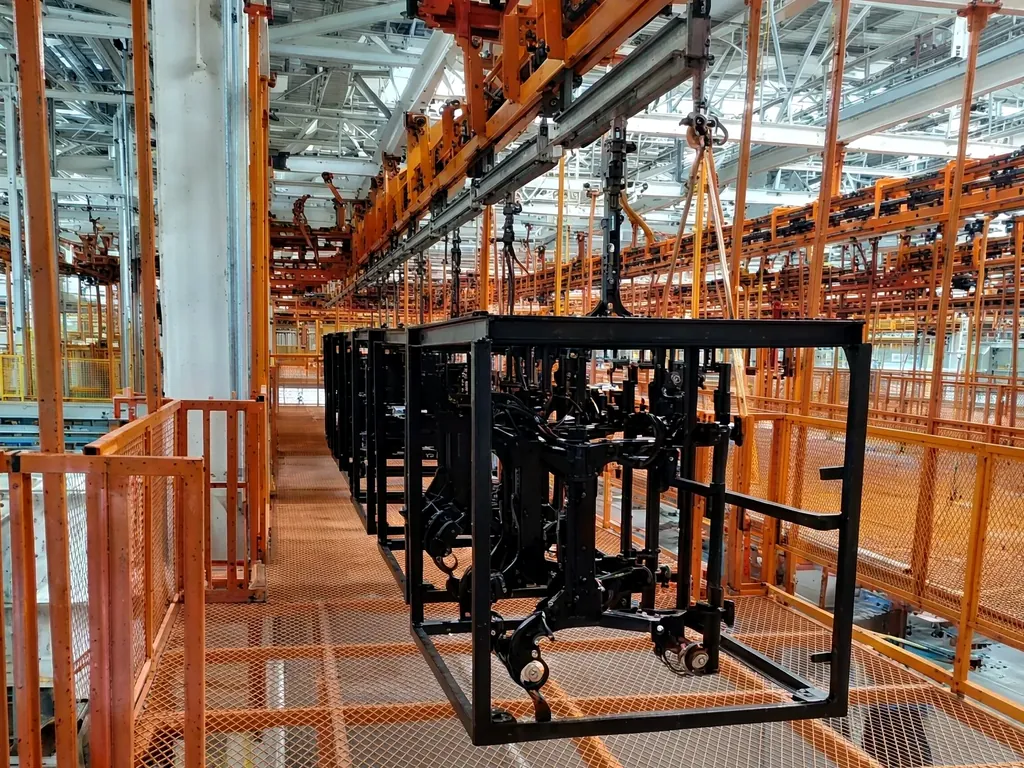
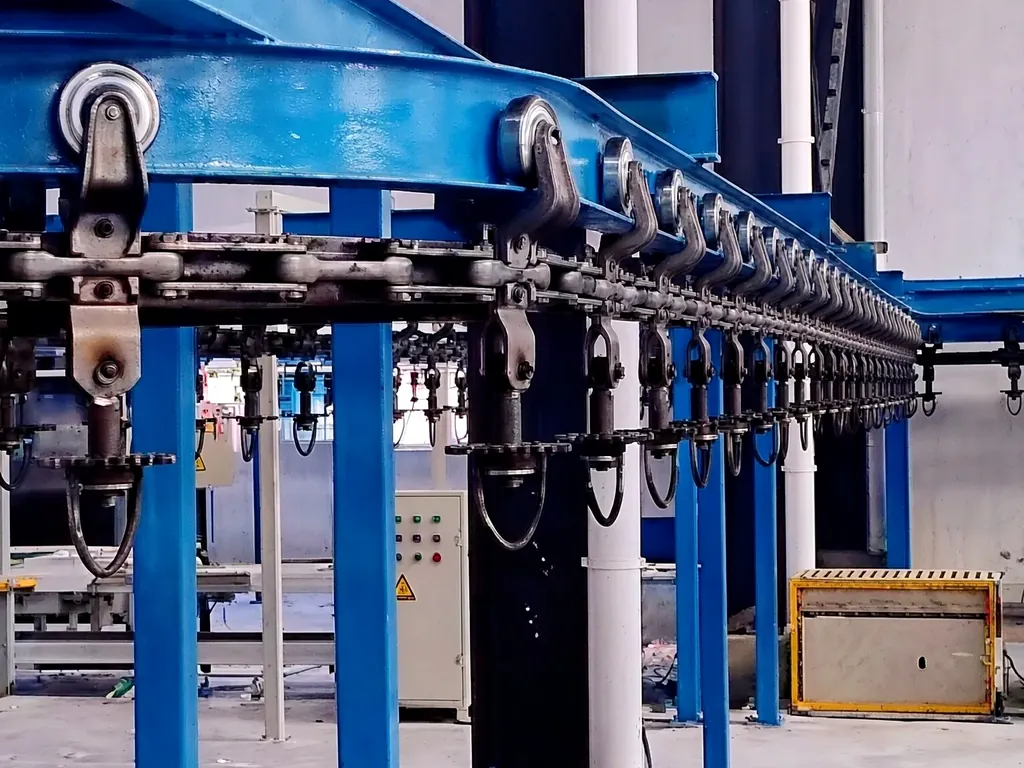
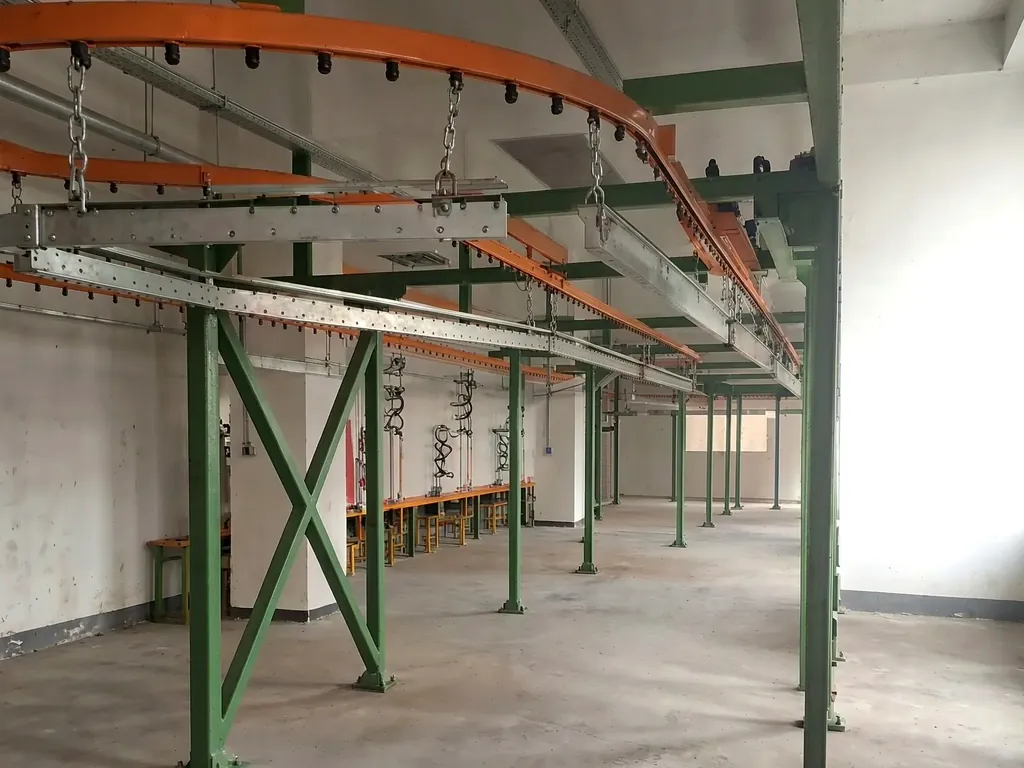
A crane or hoist lifts and places individual loads where an operator wants them. An overhead conveyor moves a continuous stream of loads along a fixed route. Both use the space under the roof, but they solve different problems.
| Factor | Overhead conveyor | Crane / hoist |
|---|---|---|
| Flow | Continuous, many loads | One load at a time |
| Route | Fixed track | Anywhere under the runway |
| Operator | Mostly automatic | Operator for each lift |
| Loads | Light to heavy, repeated | Very heavy, variable |
| Processes | Runs through ovens, booths, washers | Moves loads between processes |
When Each Fits
01Choose an Overhead Conveyor When…
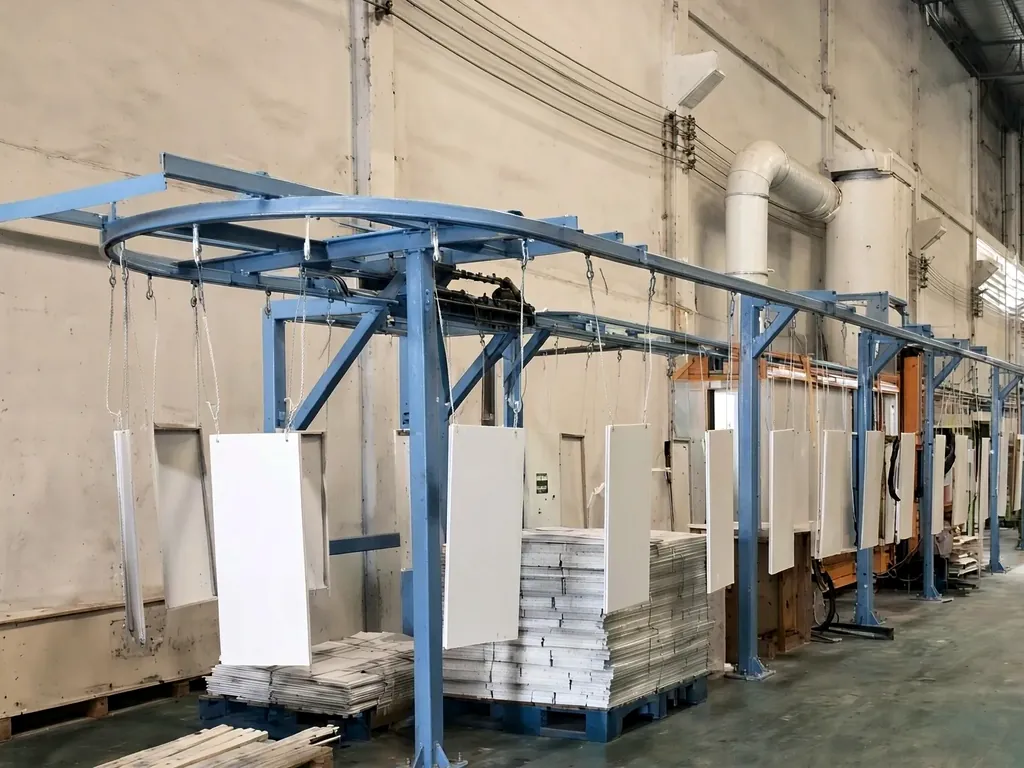
Many similar loads follow the same route at a steady rate, especially through processes like coating or assembly.
Benefits
- Steady output
- Little operator time
- Process integration
Limits
- Fixed route
- Less suited to one-off heavy lifts
02Choose a Crane When…
Loads are very heavy, irregular or need placing anywhere in a bay, such as machine assembly or maintenance.
Benefits
- Flexible placement
- Very high capacities
- Simple for low frequency
Limits
- Operator for every move
- No continuous flow
03Combine Both
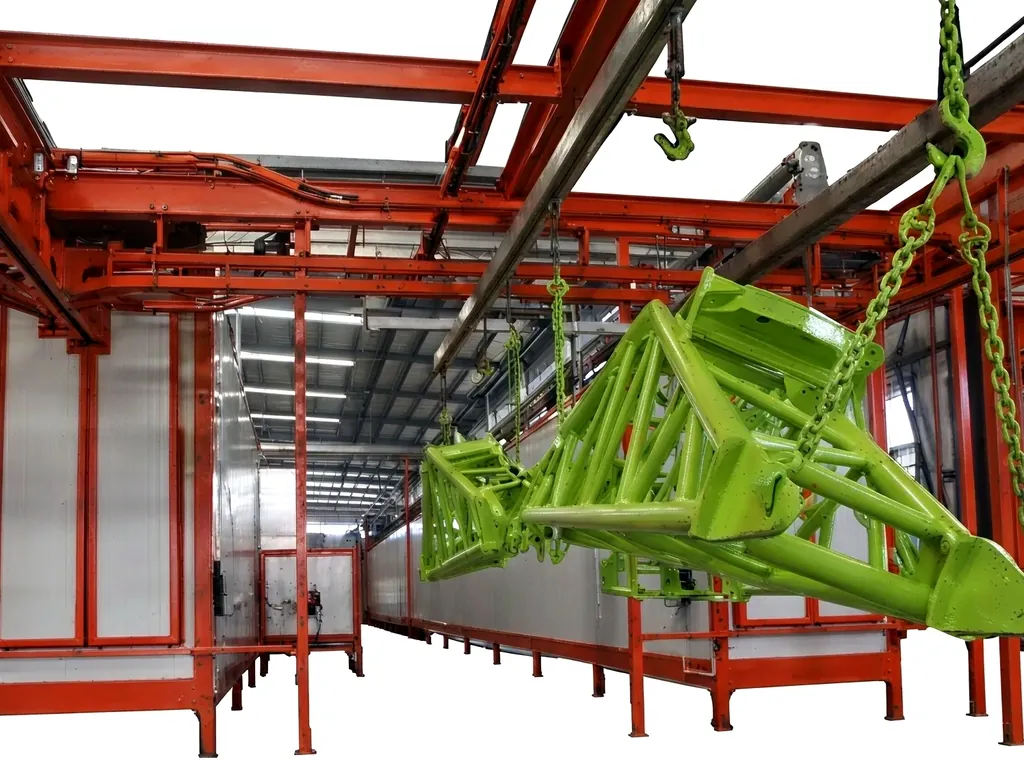
Many heavy-fabrication plants load frames onto conveyor load bars with a crane, then let the conveyor carry them through blasting, painting and curing.
Benefits
- Best of both
- Crane only at loading and unloading
Watch
- Interlocks between crane and conveyor
Questions to Decide
- How many loads per hour, and how similar are they?
- Do loads pass through ovens, booths or washers?
- How heavy is the heaviest load?
- How much operator time is available?
- Will the route stay the same for years?